
|
Minneapolis Star Tribune
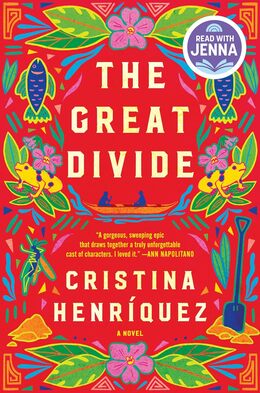
Review of Cristina Henríquez's The Great Divide The Panama Canal connected the Atlantic to the Pacific Ocean in 1914 but that's not the whole story. In the U.S., it is most often thought of as a feat of engineering that demonstrated American power and ingenuity. After all, Theodore Roosevelt secured rights to the area and constructed the canal shortly after France, builders of the Suez Canal, failed on a similar endeavor. Yet, historians such as Julie Greene recently have asked us to consider the perspectives of those who built the canal. Cristina Henríquez's engaging "The Great Divide" takes up that historical call by using the power of fiction to further imagine the lives of those who built and lived near the canal. |

|
Building a Writing Community On and Off the Internet: Jami Attenberg, author of the writer's guide "1000 Words," is making the literary world more accessible (Interview) Electric Literature "[T]here are always these dramatic dynamics that are impacting our attention spans, our souls, our lives, and our schedules. Figuring out where to put all that and manage all of that and still have the time and headspace for writing is why I thought it was important to include that part of the conversation. There’s always a reason not to write, unfortunately." |

|
|
|
|
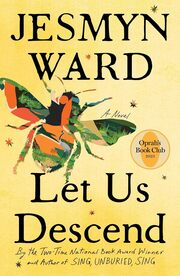
Minneapolis Star Tribune Review of Jesmyn Ward's Let Us Descend From the start, Jesmyn Ward's "Let Us Descend" is about power and violence in the antebellum South. The protagonist, a teenager called Annis, states, "The first weapon I ever held was my mother's hand," and this knowledge about the need for empowerment sets her on her way. |
|
Minneapolis Star Tribune
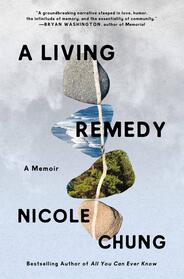
Review of Nicole Chung's A Living Remedy In her bestselling memoir "All You Can Ever Know," Nicole Chung wrote about being a Korean American adoptee in a white family and community. In her latest work, "A Living Remedy," she returns to the small Oregon town of her childhood. This time, however, she focuses on the tenuousness of her family's financial resources and access to health care while acknowledging the commonality of her story: "What had seemed like stability proved to be a flimsy, shallow facsimile of it, a version known to so many American families, dependent on absolutely everything going right." |
|
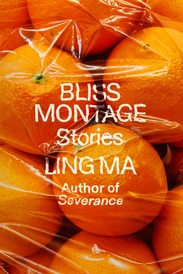
Minneapolis Star Tribune Review of Ling Ma's Bliss Montage "With such symbolic moves, suddenly a fantastic world comes right back down to earth. The story, like the book, is thoughtful, funny, and haunting, similar to those moments during sleep that you aren’t sure are a dream, a nightmare, or a warped reflection of the day." |
|
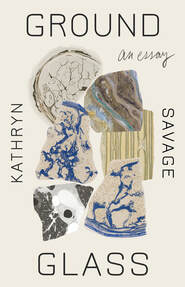
Minneapolis Star Tribune Review of Kathryn Savage's Groundglass "The structure of the book suits its subject and approach. The writing moves organically from idea to idea and place to place, the way that memory does--as well as the way that toxic waste might seep from one place to the next, into the groundwater, into us, and perhaps then even genetically into the next generation." |
|
Minneapolis Star Tribune
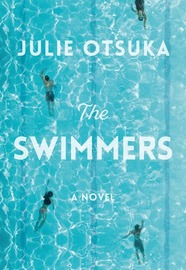
Review of Julie Otsuka's The Swimmers There is a minimalism to Julie Otsuka's work. The sentences in her slim books dive right into the details. About once a decade, readers are treated to a novel of Otsuka's well-honed words: The Buddha in the Attic in 2011 and When the Emperor Was Divine in 2002. So, I am thrilled that her latest book, The Swimmers, is another artfully refined story, even when it delves into the most painful parts of life. |

|
CRAFT Literary Interview of Randon Billings Noble As a writer and professor, I am often on the lookout for books on craft to expand my thinking when I write and to expand my explanatory powers when I teach. A new anthology edited by Randon Billings Noble is certain to achieve both goals for those engaged with the lyric essay. |
|
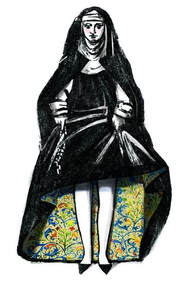
Boston Globe "In Matrix, Illuminating a Mysterious History" The tale begins with a 17-year-old woman riding "out of the forest alone" into a "place of her living death." Cast out of privileged society, she approaches the site of her new forced monastic life. Thus, Lauren Groff introduces her readers to "Marie who comes from France." |
|
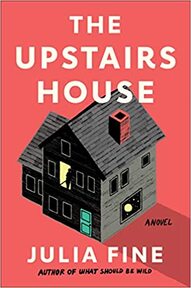
Boston Globe "A Surreal Postpartum Life in The Upstairs House" In this gripping and stylistically impressive novel, Fine illustrates how the rational and the mythic, the tangible and intangible, intertwine to fully tell a woman’s story. |
|
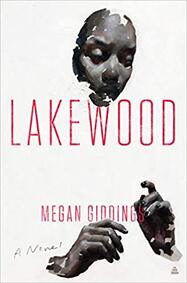
Boston Globe "Medical Malevolence: Echoes of Tuskegee Haunt Megan Giddings's 'Lakewood'" Fiction can enhance our historical knowledge while adding a personalizing gaze, and Megan Giddings does just that in her debut novel, "Lakewood," which intertwines historical fact and speculative fiction into a story about exploitative experimentation that monetizes the body and dehumanizes certain lives. |
|
Colorado Review
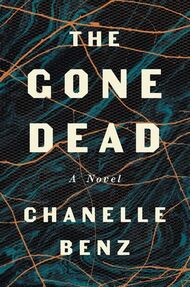
Chanelle Benz's The Gone Dead “So this place is all longing and water and ghosts.” This elegiac description of the Mississippi Delta establishes a setting for The Gone Dead where the past and the present interact. I was looking forward to this atmosphere of mossy trees, yearning, and secrecy when I picked up Chanelle Benz’s first novel, but I wasn’t expecting its deeply affecting cultural commentary. It turns out that Benz knows how to propel readers forward with a dramatic plot while letting those readers linger in the craft of her words and the racial terrorism of our society.e body and dehumanizes certain lives. |
|
Minneapolis Star Tribune
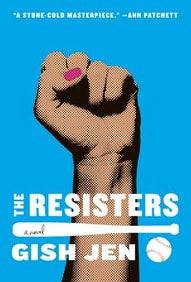
Baseball and a technological dystopia collide in Gish Jen's The Resisters In her latest novel she tackles these topics within a dystopian realm, empowering readers to ruminate on our current political climate in a defamiliarized reality that brings home how the world she presents is already our own. . . . Jen takes us on an entertaining ride in a new yet familiar world as we contemplate that “it was we who made our world what it was. It was we who were responsible.” |
|
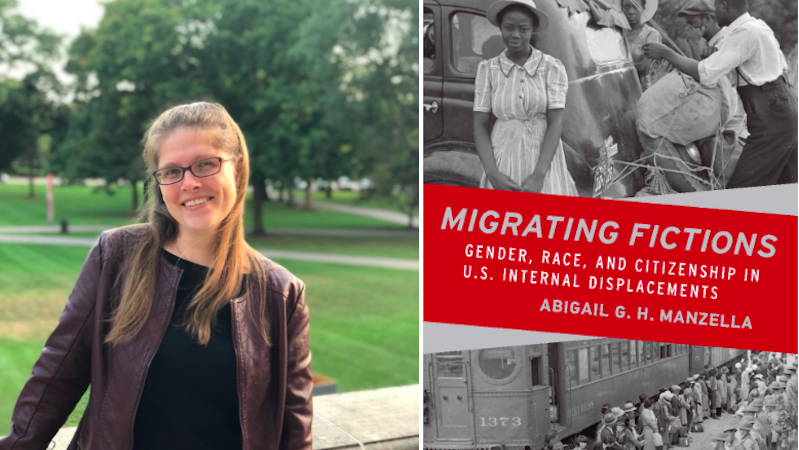
Book Marks at Literary Hub "Secrets of the Book Critics" Abby Manzella on Charles Chesnutt, Willa Cather, and Pop Culture Podcasts "I relish reading critics with whom I don't agree because then I have to think through the details of my opposition." |
|
Pittsburgh Post-Gazette
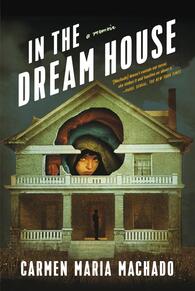
"Seeing the Beauty and the Pain in Carmen Maria Machado's In the Dream House" The book begins with a piling up of epigraphs, page after page, keeping the reader from the official start of the story. With this extended parataxis, she is letting readers know that the structure will be other than the expected....This is a book about the ephemeral and the concrete all at once--stories are the architecture of our very selves, so what happens in our minds and to our bodies both forms who we are. Therefore, the bricks of the stories we tell can wall us in or build us a home, for better or worse. |
|
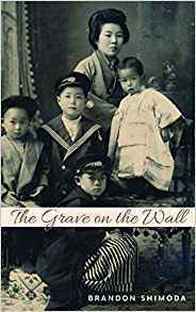
High Country News "What Remains in the Ruins of Japanese American Internment" The Grave on the Wall bends and blends myth, research, travelogue, elegy, and memoir. The chapters generally follow Shimoda’s journey back through his grandfather’s life, but his investigations also explore other elements of the family’s history and even include leaps across mythological and geologic time. Yet, despite his structure that many would call fragmented, I would instead label smartly granular. |
|
St. Louis Post-Dispatch
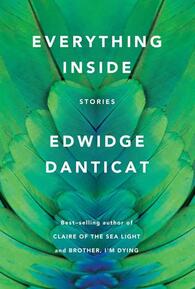
"Love Stories Can't Escape Politics: Edwidge Danticat's 'Everything Inside'" The short stories reveal the possibilities and dangers of relationships where one discrete life brushes up against another. Characters bridge boundaries literal and figurative — of self, culture and geography — risking much to gain much. But they find that even intimate moments are constantly shaped by politics and history. “Everything Inside” quietly yet consistently demonstrates that lacking an awareness of both public and private stories constrains us from building better relationships with one another. |
|
Pittsburgh Post-Gazette
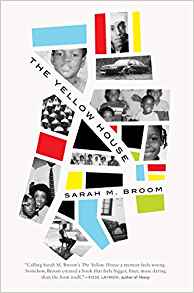
"'The Yellow House' Maps a Family's History in New Orleans" Because the narrative beings following the family long before the arrival of the 12th and final child--the author--this work is more than a personal memoir. It is a mapping of a place and of a family, moving beyond the literal representation of space into the inner dimensions of the Brooms' world, functioning as both an intimate and cultural history....It becomes a people's history that tells the story from inhabitants who lived it rather than the leaders who ruled over it. |

|
Literary Hub
"A Literature of Belonging: Stories of Real America" It is important that we see how the language we use and the narratives we build can harm immigrants and refugees, or they can be employed to extend welcome while expanding the voices we hear and the knowledge we possess. Our words could show that no one should be made to feel that their citizenship is contingent no matter if they were born here or came here from somewhere else. Then again, no one should have their rights diminished, no matter the status of their papers. |
|
Pittsburgh Post-Gazette
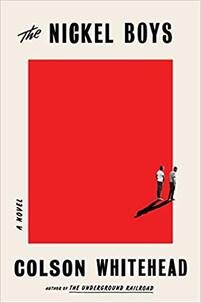
'The Nickel Boys' : A Haunting Meditation on a Jim Crow Era Reform School Colson Whitehead follows up his Pulitzer-Prize-winning Underground Railroad with another powerful narrative about America and its institutionalized racism. The Nickel Boys grips us from the very first line: "Even in death the boys were trouble." The words invoke a Morrison-esque poetic simplicity that speaks to a toxic past that continues to haunt us. |
|
"Harmful Stories Are on the Rise":
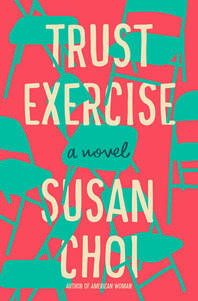
The Millions Interviews Susan Choi Susan Choi: With this book I had all the same craft-centric thoughts about what perspective would work best, but it’s true that I was also thinking a lot more about the role of storytelling in our lives and not just in the books we read. Our culture and our politics are all stories, often contending stories, often harmful stories—and harmful stories are on the rise right now, it seems to me. So, I was thinking a lot about who gets to tell these stories, and who gets told about, and all the harm that can be done. |
|
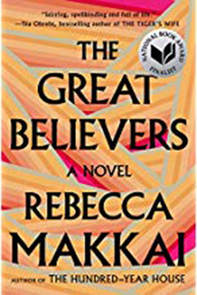
The Kenyon Review On Rebecca Makkai's The Great Believers This is a book about loss, but it is also about a sense of continuance through the stories we tell, their tellers, and the lessons we learn from them. Those lost will remain in the minds of these characters and, now, in the minds of the reader. The Great Believers is devastating and beautiful, and very worth remembering. |
|
The Millions
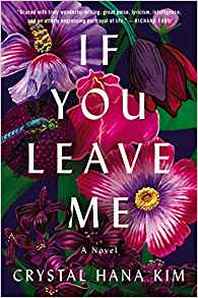
What Are We Willing to Sacrifice?: On Crystal Hana Kim's If You Leave Me This is a grand, sweeping story that proves that an epic can yield strong, individualized characters while still developing a nuanced perspective that refuses to essentialize war, women, or national identity. The trauma of the war lingers for each of these characters even as they realize, like Jisoo does, that “We weren’t rebuilding. We were shaping ourselves into a different form.” Korea, the characters, and the narrative structure itself all show this to be true. The novel impressed me in ways I wasn’t expecting, and I’ll be keeping my eye on Crystal Hana Kim to see what she’ll do next. |
|
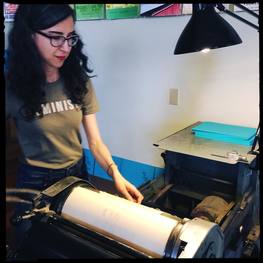
Michigan Quarterly Review Impossible Walks: An Interview with Kathleen Rooney Kathleen Rooney is gracious in her interaction with others. When I first met her, she immediately drew me in by sharing the details of her stroll that day around my town of Columbia, Missouri before her weekend’s engagement at the 2018 Unbound Book Festival. If you follow her online, you will get to see photos of such walks where her artistic shots denaturalize the everyday. |
|
The Kenyon Review
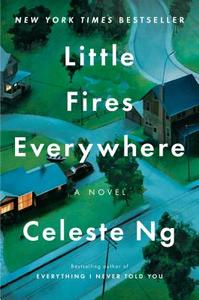
On Little Fires Everywhere by Celeste Ng The novel follows the complex social, class, and legal relationships between all of these individuals as we realize how much they judge one another, feeling certain in their own stance. Ng’s work reveals how perceptions and positionality that fail to consider other ways of seeing and living limit the relationships we are able to build. |
